almost monday Interview
Written by KUCI on October 29, 2026
on an almost friday
Live at the Observatory North Park | October 22, 2026
By four in the afternoon, people were already waiting outside the Observatory North Park. Doors weren’t scheduled to open until seven. They helped me find out where to find the band. Three hours early, and it seemed San Diego had begun assembling for the return of their own almost monday.
For a band whose beginnings involved playing shows in the back of surf shops now out of service, a sold-out hometown performance feels like a considerable change of scenery. Dawson Daugherty, Luke Fabry, and Cole Clisby have spent the better part of their careers moving outward from San Diego, touring internationally and steadily accumulating an audience beyond the Southern California coastline.
 Backstage before Thursday’s performance, I asked the trio whether coming home felt like a victory lap or a regression to their younger selves.
“I think it feels really special,” Daugherty said. “The biggest headline shows we’ve done!”
He spoke about the privilege of traveling with something to contribute to the places he visits, rather than simply passing through them. Europe to Asia, and back to the states, they are all grateful to sing and share.
“Still shocked that we get to do it!”
A few hours later, Daugherty would be standing on amps, racing between opposite ends of the stage, and behaving like a man entirely accustomed to stardom.
The Observatory was packed. Teenagers, young adults, married couples; almost monday’s audience was hardly limited to the demographic you might expect from a band whose music is frequently described as surf rock. The room was loud, eager, and, once the performance began, almost impossible to keep still.
Daugherty bounced across the stage with remarkable persistence, climbing onto equipment and repeatedly returning to the edge of the crowd. His movements were restless but deliberate, as though standing still might allow the energy in the room to escape. Fabry and Clisby held down the band’s instrumental foundation while Daugherty made full use of the space in front of them.
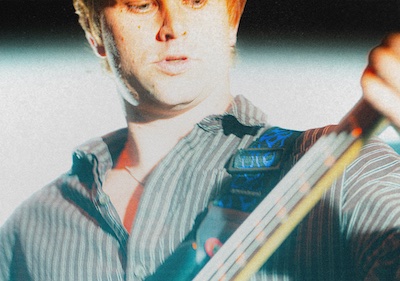 It was intensely fun. The band’s objective seemed to be getting as much enjoyment out of the evening as physically possible, then insisting that everybody else participate. Which, after speaking with them backstage, felt entirely intentional. almost monday makes optimistic music. That’s the easiest observation anyone can make about them, and probably the least interesting one.
But the band doesn’t seem to confuse making happy music with being happy all the time.
“It’s cool when people are in a good mood and you’re not,” Fabry told me, describing how somebody else’s optimism can eventually rub off on you.
“Even if you’re not feeling good in the moment, you can be a source of feel-good for someone else. Kind of makes you feel good!”
Daugherty had recently been thinking about something Zara Larsson said about being a joyful person without pretending that sadness doesn’t exist.
“I’m just really happy, joyful person. It doesn’t mean I don’t get sad. I’m not a robot,” he recalled her saying.
“I just really like bringing that to people, especially when the world feels really heavy,” Daugherty explained. “We’re a small band, but it feels good to bring that tiny small win. Feels good to me.”
The band’s performance never seemed particularly interested in restraint. The songs arrived with enough momentum to keep the crowd moving, and Daugherty rarely allowed a moment to settle before pushing the room into the next one. There was a sense of urgency to the fun, as though the night would be wasted if anyone left with energy to spare.
Their cover of New Radicals’ “You Get What You Give” fit naturally into the evening. A song about youthful defiance and holding onto some sense of possibility, delivered by a band that has made those impulses central to its identity. It could almost have been an almost monday original.
Daugherty and Fabry met while surfing. They attended Point Loma Nazarene University, where they were roommates in Young Hall. Their early shows took place in surf shops. They grew up in a city whose weather and coastline have become shorthand for an entire category of upbeat guitar music.
When I asked what touring the world hadn’t managed to erase about their San Diego identities, Daugherty didn’t have to think very hard.
 “We all surf,” he laughed. “It’s typical, but we do.”
He even mentioned that professional surfer Jake Marshall, one of their hometown heroes, would be coming to the show.
But almost monday haven’t always been so willing to embrace the obviousness of their surroundings.
“Early on we thought we had to be different from SD to be successful,” Fabry admitted.
The band initially looked toward whatever music seemed popular elsewhere, attempting to emulate sounds that might carry them beyond their hometown.
“The best chance you have is playing your cards, and we’re from SD. Allowing ourselves to be okay with that.”
Fabry brought up “sunburn,” one of the earlier songs that seemed to connect with listeners.
“I mean, one of the first songs that felt like connecting,” he said. “Also felt like, oh, it’s a song about the sun and we’re in SD, so… But I mean, that’s us!”
The band’s debut album, DIVE (2024), established much of the sound listeners associate with almost monday: guitar-driven indie-pop, relaxed California rhythms, and melodies that seem perpetually headed toward summer.
Their second record, THANK GOD IT’S ALMOST MONDAY, is less easily summarized.
The newer material moves between different approaches to rhythm, production, and arrangement. “Superprism” is playful and unusually textured. “No more regrets” leans into a more dance-oriented sensibility. “Class a” takes a different approach to layering its instruments, while songs like “skinny dip” preserve the loose, coastal character of their earlier work.
The distance between those songs is considerable. They don’t all sound as though they belong to the same narrow genre, even if they remain recognizably almost monday.
When I asked whether the band had consciously evolved beyond surf rock, Clisby pointed to “skinny dip.”
“We’ve evolved beyond surf rock, but at its core we still do it, and probably will keep doing it!”
Fabry sees that flexibility as one of the band’s strengths.
“I feel like one of our superpowers, we have a really wide range,” he explained, pointing to “skinny dip,” “can’t slow down,” and “jupiter” as examples.
“Some bands are great at being conceptual, but I think we’re all over the place.”
Daugherty was less certain that listeners necessarily heard the same diversity.
 “I saw someone write something saying almost monday is a one-trick pony,” he said. “I’m so curious to hear what other people perceive. We feel like it’s wide, but it’s really interesting!”
Fabry offered what might be the most useful distinction of the entire conversation.
“Sonically we’re wide. Content-wise more singular.”
almost monday’s musical arrangements have become increasingly varied, but their emotional intentions remain remarkably consistent. The production might shift from one song to another; the underlying desire to leave listeners feeling better rarely does.
Whether that consistency is a strength or a limitation probably depends on what someone wants from the band.
There’s an argument that almost monday could stand to be less relentlessly agreeable. Some of their music is so immediately pleasant that individual songs risk blending together, their bright surfaces obscuring the differences beneath them. A band capable of moving between so many sounds might eventually benefit from allowing more emotional friction into the music itself.
But that criticism becomes harder to sustain in front of a sold-out audience that seems delighted by the very qualities you’re questioning.
Onstage, the contrast between the band’s earlier material and its newer songs felt less like a change in identity than an expansion of possibilities. The recognizable guitar-driven energy remained, but the set had enough variety to avoid becoming an extended exercise in the same sunny formula.
And Daugherty, for his part, performed every song as though it might be the most exciting one they’d written.
There are smaller, more personal reminders of that growth, too. Fabry has a tattoo that stretches from his neck down his arm, an unmistakable feature that carries a surprisingly simple meaning: trusting himself. It’s a fitting sentiment from someone who, earlier in our conversation, admitted that the band once believed success required distancing themselves from their San Diego identity. Now, with a few more years and considerably more miles behind them, the idea of trusting their own instincts seems to extend beyond the music.
Clisby, meanwhile, has his own relationship with the band’s history through photography. Before almost monday had the resources to bring photographers on tour, he was often the one documenting what happened backstage. As the band grew, professional tour photographers gradually took over that responsibility, and Clisby admitted he doesn’t feel the same need to pick up his camera anymore. It’s a small but revealing consequence of success. The photographs still get taken, but the person behind the camera has changed. There’s something particularly charming about imagining the band’s guitarist documenting those early, less-polished years himself, before the shows became bigger and the backstage moments became somebody else’s assignment. Personally, I’d like to see him bring the camera back.
One of the stranger details to emerge from our backstage conversation was Daugherty’s contribution to a BTS recording.
He described being in Los Angeles, staying with a producer friend, when an opportunity appeared almost by accident.
“I got back from the studio, and he’s working on the dining room table,” Daugherty recalled. “Yo, I’m doing this BTS song, wanna sing on it?”
Daugherty also remembered discovering that members of BTS had listened to almost monday’s music backstage, and that SEVENTEEN had once sent the band a note with an album.
It’s a funny distance to travel from playing in surf shops: international tours, a growing discography, and a casual invitation to contribute vocals to a song for one of the world’s biggest pop groups.
The point, at least as they described it to me, isn’t to escape San Diego, abandon surf rock, or become something unrecognizable. It’s to keep making music they enjoy, with enough freedom to follow wherever their interests lead. And, preferably, to make other people happy in the process.
By the time almost monday took the stage at the Observatory North Park, the crowd had already spent hours anticipating their arrival. Some had been waiting since four. They came from different generations, different relationships to the band’s music, and probably different expectations of what the evening would offer.
Not every hometown show needs to become a sentimental meditation on where an artist began. Sometimes the most revealing thing about a band’s return is how little effort they spend trying to prove they’ve made it.
almost monday are not quite the local surf-rock band they once were. Their music has grown stranger, broader, and more ambitious. Their audience has followed. But on Thursday night, Daugherty was still bouncing around the stage like someone who couldn’t believe he got to do this for a living, and the room was happy to believe it for him.
Words & photos by Grace De Leon | Big Sis Radio, KUCI 88.9 FM
You may also like

Continue reading